
Across Europe, summer water temperatures are rising. This can be detrimental for farmed fish, as even a small increase can disrupt their normal biological processes.
Fish cannot regulate their own body temperature. As water warms, their metabolism accelerates and oxygen demand increases. Energy that would normally support growth is redirected toward maintaining basic physiological functions, while higher metabolic activity raises oxidative pressure inside the body.
While these shifts do not necessarily result in sudden losses, they can, over time, diminish the fish’s capacity for resilience.
When biological strain becomes a production issue
Over the course of a warm season, these effects accumulate. Growth can slow. Feed conversion may deteriorate. And fish become more sensitive to handling, crowding, or seemingly minor health challenges.
In many cases, it’s not just the heat that creates problems, but the combination of heat and everyday operational handling. For producers, the summer period is becoming increasingly about managing risk rather than maximizing performance.
Nutrition as preparation, not reaction
Because water temperature cannot be controlled in open systems, preparation becomes essential. This is where functional nutrition comes into play.
Functional nutrition refers to the specific nutrients and ingredients designed to help fish cope with stress, not just to drive growth. During warmer periods, the priority shifts toward maintaining physiological balance. Fish need nutritional strategies that help them manage the strain created by higher temperatures.
This shows up in several ways. Faster metabolism increases oxidative pressure, which makes antioxidants such as vitamin E, vitamin C, astaxanthin and selenium important for protecting cells. Digestion can become less efficient in warm water, making gut integrity and nutrient absorption essential for maintaining feed utilization. Prolonged heat can also challenge immune balance, so bioactive compounds and marine-derived ingredients are used to help maintain immune readiness without adding unnecessary energy demands. Together, these nutritional measures help keep fish more stable during extended warm conditions.
Where krill fits into the strategy
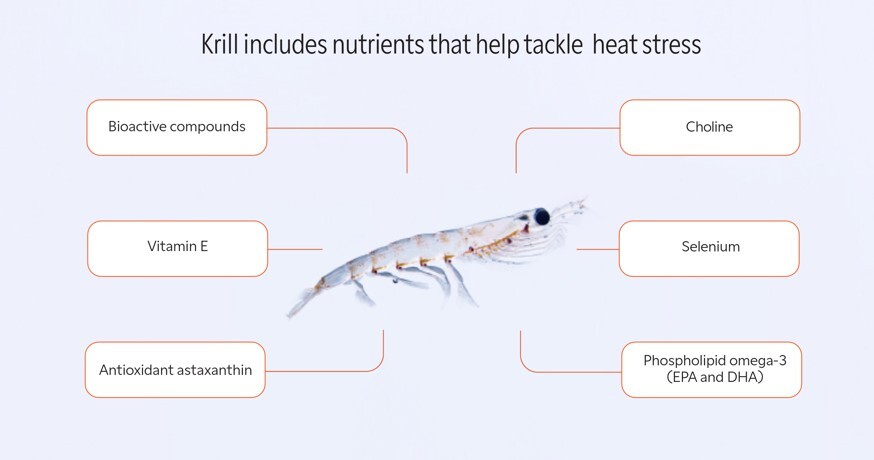
QRILL Aqua krill meal is increasingly included in functional feed formulations because it brings together several nutrients relevant to heat stress in one ingredient. It provides phospholipid-bound EPA and DHA, the antioxidant astaxanthin, vitamin E, selenium, choline, and other bioactive compounds associated with membrane stability, antioxidant defense, and immune resilience.
This combination is particularly relevant during warm periods, when oxidative pressure rises and multiple physiological systems are under strain. Rather than addressing a single function, krill contributes to broader cellular stability.
High-temperature challenge trials have shown improved tolerance and more favorable stress-related biomarkers in fish fed krill-containing diets compared to control feeds.
Krill does not replace good farm management. Oxygen control, stocking density, and careful handling remain essential. As part of a well-designed summer feeding strategy, however, it can support fish robustness during prolonged warm conditions.
Planning for warmer summers ahead
As European aquaculture adapts to changing climate patterns, summer resilience is becoming part of routine production planning. Functional nutrition plays a practical role in that preparation by helping stabilize key physiological systems when temperatures rise.
Warmer water may be outside the farmer’s control, but how well fish cope with it is not entirely left to chance.