
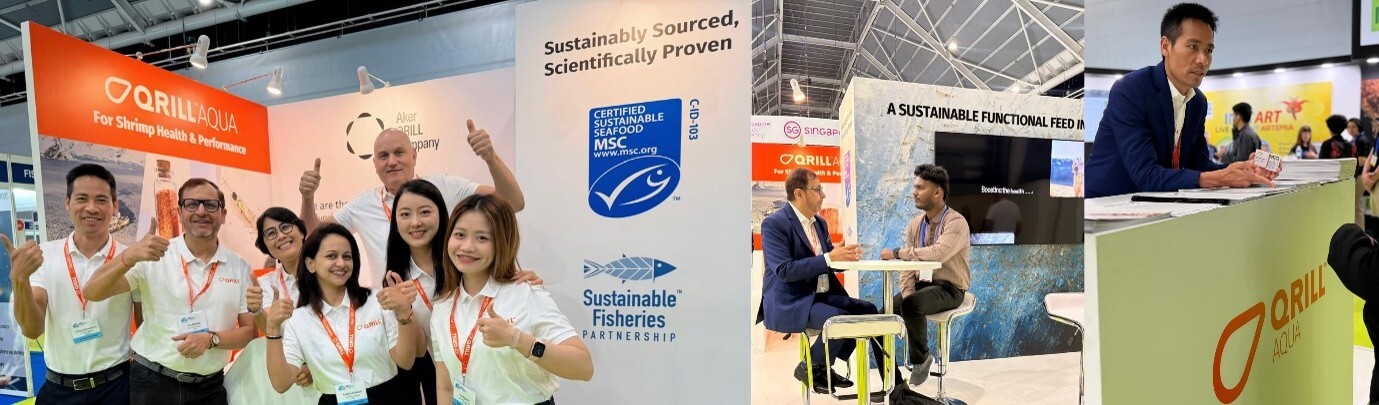
QRILL Aqua hosts the shrimp and prawn nutrition forum
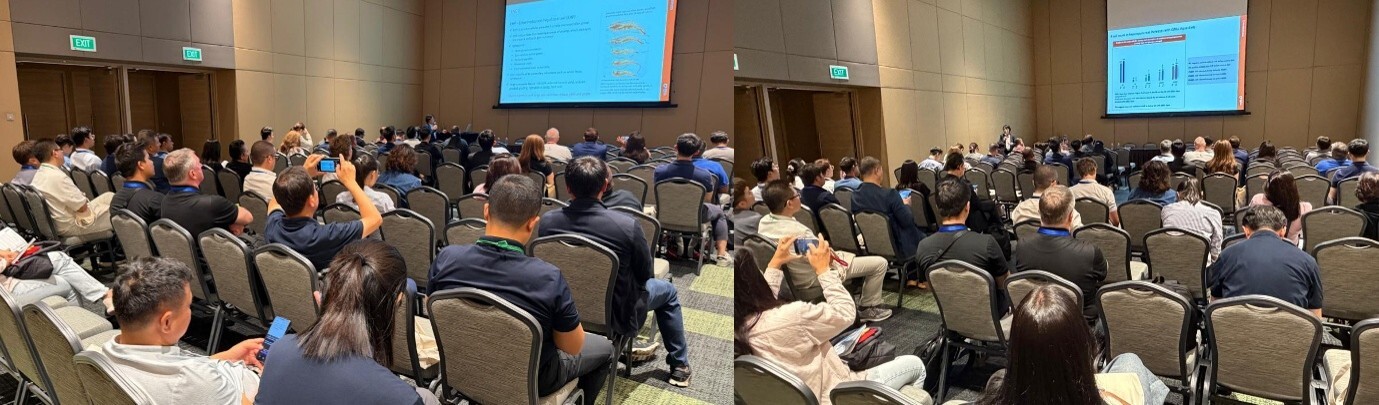
The forum on 3 June was chaired by Dr. Daranee Seguin, Product Director at Aker QRILL Company. Drawing on more than a decade of work in aquatic nutrition, she led discussions on feed efficiency, health management in shrimp, and sustainable feed formulation.
Dr. Daranee also delivered two keynote presentations addressing two of the most pressing challenges in shrimp farming today: EHP infection and chronic environmental stress.
QRILL Aqua krill meal and EHP resistance
Hepatopancreatic microsporidiosis (HPM), caused by Enterocytozoon hepatopenaei (EHP), continues to disrupt the global shrimp aquaculture. There is no pharmaceutical treatment available, and management is therefore limited to biosecurity and nutritional strategies aimed at improving host resilience. The parasite targets the hepatopancreas, the organ responsible for digestion and nutrient absorption, causing severe growth retardation and size variation which lead to significant losses on farms.
In an 8-week trial, diets containing 6% to 9% QRILL Aqua krill meal significantly improved growth, feed conversion ratio, and survival in juvenile Pacific white shrimp (4 - 5 g) compared to EHP-infected controls (p < 0.001). Hepatopancreas histology confirmed a significant dose-dependent increase in R-cell counts in the hepatopancreas of shrimp fed krill meal (p < 0.001), pointing to improved digestive and metabolic function. Quantitative PCR indicated a clear drop in EHP pathogen load in the krill-fed groups. Proteomic analysis of hepatopancreas tissue identified dose-dependent upregulation of proteins associated with energy metabolism, protein synthesis, and innate immune response in krill-fed shrimp, supporting the mechanism by which QRILL Aqua supports hepatopancreatic recovery, reduces EHP pathogen load, and strengthens host immune defense in a mechanistically coherent and dose-dependent manner. Farm-level economic modelling also indicated that the performance improvements translate to a net profit recovery.
Stress resistance and osmoregulation
A second study looked at osmoregulation and chronic stress under high-salinity conditions (32 to 41 g/L). Partially replacing fishmeal with 5% QRILL Aqua maintained normal growth in Litopenaeus vannamei while lowering the feed conversion ratio by around 10%. The economic effect was an additional US$1,477 per hectare per culture cycle.
Adding 2% to 6% QRILL Aqua to plant-based diets also improved survival and growth performance. The effect is linked to active components in QRILL Aqua, including Omega-3 phospholipids (EPA/DHA), astaxanthin, free amino acids including taurine, nucleotides, and TMAO. These functional nutrients help stabilise cell membrane structure, maintain osmotic balance, provide backup energy and reduce the metabolic load on ion pumps, and stimulate feed intake allowing shrimp to keep feeding and growing under temperature and salinity stress.
At a low inclusion rates of 3% and 5%, Antarctic krill meal also fits within ASC (Aquaculture Stewardship Council) feed requirements and benefits from MSC certification and a fully traceable supply chain. As environmental pressure and disease risk increase, resilience is becoming a more important measure of farm performance.
 “The future of aquaculture is about more than higher yields. It is also about green, low-carbon, sustainable and responsible practices,” said Dr. Daranee. “AQC works with farmers to address disease pressure and environmental stress through science-based functional nutrition, with the aim of better economic returns and long-term sustainability.”
Aker QRILL Company has been active in aquaculture for more than 20 years, with sustainability and applied research at the centre of its work. The company supplies high-quality krill-based ingredients backed by trial data and nutritional support, and continues to invest in functional nutrition R&D as climate change and environmental variability put new pressure on aquaculture systems.